Moving cost Toronto to Vancouver is one of the most common questions Canadians ask when planning a cross-country relocation.
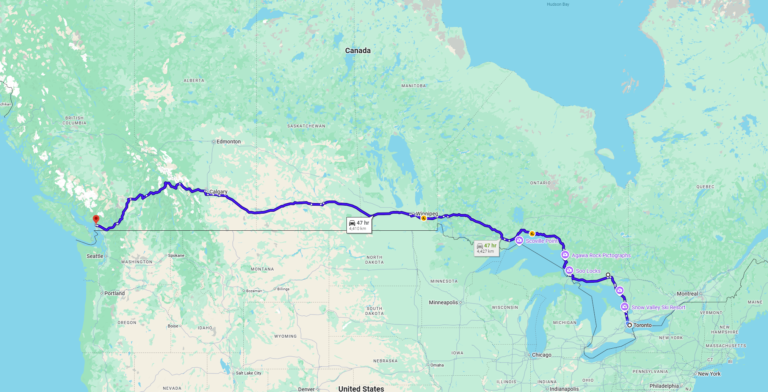
With a road distance of approximately 4,382 kilometres, this move is one of the longest domestic routes in Canada, and the price can vary significantly depending on several factors such as shipment weight, access conditions, time of year, and the level of service you choose.
Unlike local moves that are typically priced by the hour, long-distance moving is calculated using a completely different pricing model.
Professional movers estimate the total weight of your belongings, the transportation distance, fuel surcharges, and additional service fees such as packing, storage, or difficult building access.
Because of these variables, the cost of moving from Toronto to Vancouver can range anywhere from a few thousand dollars for a small apartment to well over $10,000 for larger homes.
Planning a move across four provinces requires careful coordination, experienced movers, and realistic budgeting.
Many homeowners choose to work with experienced long-distance moving companies like Kams Movers, which specialize in planning complex relocations and providing detailed estimates so customers understand exactly how pricing is calculated before moving day.
In this guide, we’ll break down the Toronto to Vancouver moving cost in 2026, including average prices by home size, hidden fees that can increase your quote, transit times, seasonal price differences, and practical tips to help you plan your move efficiently.
Average Moving Cost from Toronto to Vancouver
For most households, the moving cost from Toronto to Vancouver depends mainly on the weight of the shipment, the size of the home, and the services included in the move.
A small apartment with minimal furniture will cost significantly less than a fully furnished house that requires packing services and special handling.
Below are the average full-service moving costs for a Toronto to Vancouver move in 2026.
| Home Size | Average Moving Cost (CAD) |
| Studio Apartment | $3,800 – $4,200 |
| 1-Bedroom Apartment | $4,500 – $6,500 |
| 2–3 Bedroom Home | $7,000 – $10,000 |
| 4+ Bedroom Home | $10,000 – $13,000+ |
These estimates assume:
- Standard building access at both locations
- No full packing service included
- Mid-week scheduling outside peak summer months
- Average shipment weight for each home size
However, the cost of moving from Toronto to Vancouver can increase if additional services are required.
Factors such as stairs, long carry distances, elevator reservations, packing services, storage, and seasonal demand can all affect the final quote you receive.
In the next section, we’ll explain how long-distance moving pricing actually works in Canada, so you can understand exactly what movers include in their estimates.
How Long-Distance Moving Is Priced in Canada
Long-distance moves in Canada are priced very differently from local moves.
Instead of charging by the hour, most moving companies calculate the price using a linehaul pricing model, which is based primarily on the weight of your shipment and the distance it needs to travel.
Because the route between Toronto and Vancouver spans more than 4,000 kilometres, transportation logistics, fuel consumption, and transit time become major cost factors.
Understanding how this pricing system works helps you interpret moving quotes more accurately and avoid surprises on moving day.
The Formula Behind Long-Distance Moving Quotes
Most long-distance moving companies calculate your quote using three main components:
- Base linehaul rate: typically between $0.90 and $1.40 CAD per pound, applied to the estimated weight of your belongings
- Fuel surcharge: commonly around 15% to 25% of the transportation charge, depending on fuel prices
- Accessorial fees: additional charges for services such as stairs, long-carry distances, shuttle trucks, packing materials, or storage
The simplified formula looks like this:
Base transportation rate × shipment weight + fuel surcharge + accessorial services = total moving cost
For example, if your shipment weighs 5,000 pounds and the linehaul rate is $1.10 per pound, the base transportation cost would be about $5,500.
A 20% fuel surcharge would add approximately $1,100, bringing the total to $6,600 before additional services.
This is why two households moving the same distance may receive very different quotes.
The Toronto to Vancouver moving cost depends heavily on how much furniture and personal belongings you are transporting.
How Much Do Household Items Usually Weigh?
Most homeowners underestimate the total weight of their belongings.
Moving companies rely on weight estimates because it is the most accurate way to determine the transportation cost of long-distance moves.
Typical shipment weights include:
- Studio apartment: 2,000 – 2,500 lbs
- 1-bedroom apartment: 2,500 – 3,500 lbs
- 2–3 bedroom home: 6,000 – 9,000 lbs
- 4-bedroom home: 10,000 lbs or more
Because weight directly affects pricing, decluttering before your move can significantly reduce the final cost.
Selling, donating, or discarding unused furniture and household items can remove hundreds or even thousands of pounds from your shipment.
Hidden Fees That Can Increase Your Moving Cost
Many homeowners assume the number in their first moving quote is the final price.
In reality, long-distance moving estimates often include only the base transportation charge, while several additional services are priced separately.
These extra costs are called accessorial fees, and they can significantly affect the final Toronto to Vancouver moving cost.
Understanding these potential charges before signing a contract can help you avoid surprises and compare quotes more accurately.
Access Conditions at Pickup and Delivery
Most moving quotes assume standard access at both the origin and destination.
This means a full-size moving truck can park close to the entrance, there are no difficult staircases, and no special building requirements exist.
However, many properties in Toronto and Vancouver do not meet these conditions.
For example, condo buildings often require:
- Elevator reservations
- Certificates of insurance from the moving company
- Restricted moving hours
- Limited truck access in downtown areas
If the moving truck cannot park close to the building entrance, movers may need to carry items a longer distance or use a smaller shuttle truck to complete the delivery.
These factors increase labour time and equipment requirements, which adds to the overall cost.
Common Moving Surcharges
Several additional charges may appear on long-distance moving invoices.
These are legitimate services, but they are often not included in the base quote.
Typical surcharges include:
- Stair fees: $50 – $150 per flight of stairs
- Long carry fees: $75 – $200 if the truck must park far from the entrance
- Shuttle service: $200 – $500 when large trucks cannot access the property
- Elevator reservation fees: $50 – $100 in buildings requiring scheduled moves
These fees can apply at both the pickup and delivery locations, which means they may be charged twice on a long-distance move.
Professional Packing Costs
Many quotes also exclude professional packing services.
If you want movers to pack your belongings, additional labour and materials will be required.
Typical packing costs include:
- 1-bedroom apartment: $600 – $900 including materials
- Full house packing: $1,500 – $1,900 or more depending on inventory
For long-distance relocations, professional packing is often recommended because items will spend several days on the road travelling across Canada.
Proper packing reduces the risk of damage caused by vibration, shifting loads, and long transit times.
How Long Does It Take to Move from Toronto to Vancouver?
A move between Toronto and Vancouver typically takes 7 to 14 days for delivery, depending on the moving company’s schedule, shipment consolidation, weather conditions, and road logistics.
Because the route spans more than 4,300 kilometres across multiple provinces, long-distance moving companies must plan driver schedules, fuel stops, and safety regulations carefully.
Unlike local moves where your belongings arrive the same day, cross-country moves often involve consolidated shipments.
This means multiple households share space on the same moving truck, which helps reduce transportation costs but can extend delivery timelines slightly.
For most long-distance relocations, movers provide a delivery window rather than a fixed date.
Your belongings may arrive at any time within that window depending on route efficiency and other deliveries scheduled along the way.
How to Prepare for the Transit Window
Because delivery may take up to two weeks, it is important to prepare for a short period without your household items.
Proper planning can make this transition much smoother.
Here are a few practical tips:
- Pack a personal suitcase for at least 10–14 days, including clothes, toiletries, medications, and chargers
- Keep important documents with you, such as passports, leases, financial records, and work documents
- Do not pack essential items you may need immediately after arriving in your new home
- Consider temporary storage options if your new home will not be ready immediately upon arrival
Many homeowners moving across Canada also choose to schedule temporary accommodation or short-term rentals while waiting for their shipment to arrive.
Best Time of Year to Move from Toronto to Vancouver
The timing of your move can have a major impact on the moving cost from Toronto to Vancouver.
Demand for moving services in Canada fluctuates significantly throughout the year, and prices often rise during peak moving seasons when trucks and crews are in high demand.
Understanding these seasonal trends can help you schedule your move strategically and potentially save thousands of dollars.
Peak vs Off-Peak Moving Costs
The Canadian moving industry experiences its highest demand between May and August, when many families relocate during summer vacations or between school terms.
During this period, moving companies operate at full capacity and rates tend to increase.
Here’s how pricing typically changes throughout the year:
Summer (May – August)
This is the busiest moving season in Canada. Prices can increase 20% to 30% compared to off-season rates, and the most popular dates often book weeks in advance.
July and early August are usually the most expensive times to move.
Early Fall (September – mid-October)
This period is often considered the best balance between price and availability.
Demand begins to decrease after the summer rush, and many moving companies have greater flexibility with scheduling and pricing.
Winter (November – February)
Winter months usually offer the lowest moving rates, but weather conditions across Canada, particularly through mountain passes in British Columbia, can occasionally affect delivery timelines.
Weekends and Month-End Moves
Regardless of season, moving at the end of the month or on weekends typically costs 10% to 25% more than mid-week or mid-month moves because those dates are in higher demand.
For example, if the base Toronto to Vancouver moving cost for a three-bedroom home is around $8,000, scheduling the move during peak summer demand could increase the price by $1,500 to $2,000.
Planning ahead and remaining flexible with your moving date can significantly reduce the total cost of your relocation.
DIY vs Full-Service Movers: Which Is Cheaper?
When planning a cross-country move, many people initially consider renting a truck and driving themselves to save money.
However, once all costs are calculated, including fuel, lodging, and time.
The difference between DIY moving and hiring professional movers is often smaller than expected.
Because the Toronto to Vancouver route covers more than 4,300 kilometres, the total cost of driving a rental truck across Canada can add up quickly.
Fuel consumption, overnight stays, and long travel days all become part of the equation.
Below is a realistic comparison of the three most common moving options.
Cost Comparison: DIY Truck vs Moving Container vs Full-Service Movers
| Cost Factor | DIY Truck Rental | Moving Container | Full-Service Movers |
| Estimated total (2BR home) | $2,500 – $4,000 | $4,000 – $6,500 | $7,000 – $10,000 |
| Fuel (approx. 1,000+ litres) | $1,700 – $1,800 | Included | Included |
| One-way truck drop fee | $300 – $600 | N/A | N/A |
| Hotels during drive | $450 – $1,000 | Not required | Not required |
| Meals while travelling | $200 – $400 | Not required | Not required |
| Packing labour | You pack | You pack | Optional |
| Transit time | 5 – 7 days driving | 7 – 14 days | 7 – 14 days |
| Damage liability | Your responsibility | Limited coverage | Insured by movers |
| Best suited for | Small apartments | 1–2 bedroom homes | Larger homes |
Container moving services usually fall between DIY moving and full-service movers in both price and convenience.
You pack your belongings into a container that is then transported by a shipping company to your destination.
However, for larger homes or families with substantial furniture, full-service movers often provide the most practical solution.
Professional crews handle loading, transportation, and unloading, which reduces the physical labour and risk of damage during long-distance transit.
Can You Claim Moving Costs on Your Taxes?
Many Canadians do not realize that certain relocation expenses may be tax deductible when moving for work, business, or education.
If you are relocating from Toronto to Vancouver for employment or to attend a post-secondary institution, some of your moving costs may qualify under the Canada Revenue Agency’s moving expense deduction rules.
To qualify, your new home must be at least 40 kilometres closer to your new workplace or school than your previous residence.
A move between Toronto and Vancouver easily meets this requirement because of the significant distance between the two cities.
Eligible expenses are claimed using the CRA’s T1-M Moving Expenses form, and proper documentation is required.
Common deductible expenses may include:
- Moving company invoices for transporting household items
- Professional packing materials and services
- Temporary storage costs during the relocation process
- Transportation expenses, including vehicle travel to your new city
- Temporary accommodation while waiting to move into your new home
It is important to keep all receipts related to your move, including moving services, travel expenses, and accommodation.
If your employer reimburses part of the relocation cost, those reimbursed amounts generally cannot be claimed as deductions.
Because a cross-country move can cost several thousand dollars, reviewing CRA eligibility rules before filing your taxes can help you recover a portion of your relocation expenses.
How to Get an Accurate Moving Quote
Getting a reliable estimate is one of the most important steps when planning a long-distance move.
Because the moving cost from Toronto to Vancouver depends on shipment weight, services, and access conditions, the accuracy of your quote largely depends on how the estimate is prepared.
The most reliable quotes usually come from in-home estimates or virtual video walkthroughs, where a moving representative reviews your furniture, boxes, and household items.
This allows the company to calculate the shipment weight more accurately and identify potential challenges at the pickup location.
Phone estimates or quick online forms can provide a rough idea of pricing, but they often miss important details that affect the final cost.
When a detailed walkthrough is performed, many moving companies provide a binding or guaranteed estimate, meaning the final price should remain close to the quoted amount unless inventory or services change before moving day.
Questions to Ask Your Moving Company
Before booking your move, it is important to ask the right questions so you fully understand what is included in your quote.
Here are some key questions you should ask:
- What is the estimated shipment weight, and how was it calculated?
- Is the fuel surcharge included in the quoted price?
- Are packing services included or priced separately?
- What additional fees may apply at the pickup or delivery address?
- What is the expected delivery window for my shipment?
- What happens if the delivery window changes?
Comparing three written quotes from different companies is usually the best approach. Instead of looking only at the total price, review each quote carefully to see what services are included.
Experienced long-distance movers such as Kams Movers typically provide detailed estimates that outline transportation costs, fuel surcharges, and any potential accessorial fees so customers can plan their relocation budget more confidently.
Final Thoughts on the Cost of Moving from Toronto to Vancouver
Moving across Canada is a major undertaking, and the moving cost from Toronto to Vancouver reflects the distance, logistics, and planning required for such a long relocation.
With more than 4,300 kilometres between the two cities, transportation, shipment weight, and service options all play an important role in determining the final price.
For most households, a realistic budget for a full-service move ranges between $6,500 and $9,000 for a two to three-bedroom home, while smaller apartments may cost significantly less.
Larger homes or moves that require professional packing, storage, or difficult building access can push the total cost well beyond $10,000.
Timing your move strategically, reducing shipment weight, and requesting detailed written estimates can all help control the overall cost.
Planning ahead is especially important during the summer moving season, when demand is highest and availability is limited.
Working with experienced long-distance movers such as Kams Movers can make the process smoother by providing accurate estimates, professional packing options, and carefully planned transportation schedules for cross-country relocations.
In the end, the goal is not simply to find the cheapest option.
A successful move across Canada depends on choosing a moving company that can deliver your belongings safely, transparently, and on a predictable timeline.
Frequently Asked Questions
How far in advance should I book movers for a Toronto to Vancouver move?
It is best to book movers 8 to 10 weeks in advance during the summer season when demand is highest.
For off-peak periods such as fall or winter, booking 4 to 6 weeks ahead is usually sufficient.
Early booking increases the chances of securing better pricing and preferred moving dates.
Does the direction of the move affect the price?
Yes, sometimes it does. Moving companies often adjust prices depending on truck availability and route demand.
If more shipments are travelling in one direction, companies may offer lower prices for the opposite route in order to balance their logistics.
What is usually not included in a moving quote?
Many initial quotes exclude additional services such as fuel surcharges, packing services, stair fees, long carry charges, shuttle trucks, and storage.
Always ask the moving company to itemize all potential accessorial fees before signing a contract.
Can I claim my Toronto to Vancouver moving expenses on my taxes?
In many cases, yes. If you are moving for work, to operate a business, or to attend post-secondary education, certain moving expenses may qualify for deduction under the CRA’s T1-M Moving Expenses form, provided your new residence is at least 40 kilometres closer to your new workplace or school.
What is the cheapest time of year to move across Canada?
The most affordable time to move is typically between November and March, when demand for moving services is lower.
However, winter weather conditions across Canada may occasionally affect delivery timelines, so planning flexibility is important.