TL;DR Quick answer
Most people pay between $1,000 and $5,000 to move from Toronto to Ottawa in 2026. The price depends on three things: how much stuff you have, who you hire, and when you move.
- DIY truck rental (U-Haul, Penske): $900 – $1,400
- Moving container (BigSteelBox, PODS): $1,900 – $2,800
- Full-service movers, 1-bedroom: $1,500 – $2,500
- Full-service movers, 2-bedroom: $2,500 – $3,800
- Full-service movers, 3+ bedrooms: $3,800 – $6,500+
- Summer moves (June–August) cost roughly 15–25% more than off-season.
- Booking 6–8 weeks ahead gets you the best price and the best crews.
You’ve signed the lease (or sold the house), and now the bill for moving day is starting to feel like a guessing game.
One moving company quotes $1,800. Another quotes $4,500 for the same move.
So which one is right?
Both, actually. The cost of moving from Toronto to Ottawa changes a lot depending on the size of your home, the service you pick, and the time of year.
This guide breaks down every real number you’ll see in 2026 hourly rates, flat fees, hidden charges, and the small choices that quietly add hundreds of dollars to the final invoice.
At Kams Movers, we run this route every week.
The numbers below come from current 2026 industry pricing across Ontario, with examples from real moves we’ve handled between the two cities.
How far is the move? Distance, drive time, and why it matters
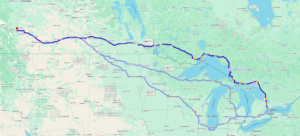
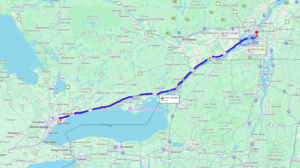
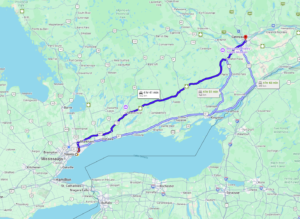
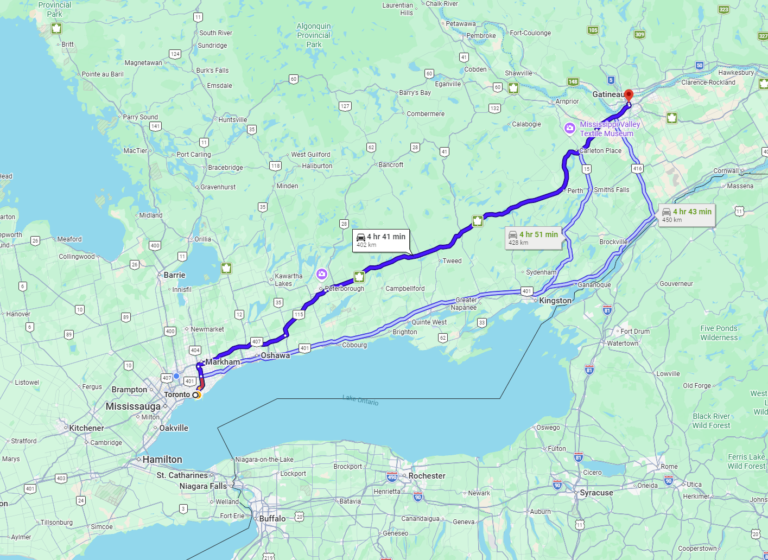
The driving distance from Toronto to Ottawa is about 450 kilometres along Highway 401 and Highway 416.
In a passenger car, it takes around 4.5 hours. In a loaded moving truck, expect closer to 5 to 6 hours one way, plus loading and unloading time.
Why does distance matter so much? Because long-distance moves are priced very differently from local ones.
A local move inside Toronto is billed by the hour. A move to Ottawa is billed by weight, volume, or a flat distance rate, usually around $2 per kilometre as a baseline, before labour and equipment are added.
Rule of thumb: Any move over 100 km in Ontario shifts from hourly billing to long-distance pricing.
That single change is what makes a Toronto-to-Ottawa move feel so different from moving across town.
Moving cost from Toronto to Ottawa in 2026: full breakdown
Here is what real households pay this year, sorted by home size and service type.
These are out-of-the-door numbers: labour, truck, fuel, basic insurance, and the standard equipment a crew brings.
| Home size | DIY truck rental | Moving container | Full-service movers |
| Studio / 1-bedroom apartment | $900 – $1,200 | $1,900 – $2,200 | $1,500 – $2,500 |
| 2-bedroom apartment or condo | $1,100 – $1,500 | $2,200 – $2,800 | $2,500 – $3,800 |
| 2-bedroom house | $1,300 – $1,700 | $2,500 – $3,200 | $3,000 – $4,500 |
| 3-bedroom house | $1,500 – $2,000 | $2,800 – $3,800 | $3,800 – $5,500 |
| 4+ bedroom house | $1,800 – $2,500 | $3,500 – $4,800 | $5,500 – $8,000+ |
Prices are 2026 averages for moves between the Greater Toronto Area and the Ottawa region, before HST. Container option assumes one 20-ft unit. Full-service prices include packing materials but not full packing labour. Sources: BigSteelBox 2024 Ontario pricing, Cassidy’s Moving 2026 rates, Squad7 Toronto 2026 calculator, and Kams Movers internal data.
The three ways to move from Toronto to Ottawa
1. DIY truck rental is cheapest on paper, hardest in practice
Renting a U-Haul, Penske, or Discount Truck Rental is the lowest-cost option on the surface.
A 20-foot truck for two days, including the standard kilometre allowance and a fuel budget of around $200, runs about $900 to $1,200 for the Toronto-to-Ottawa run.
The catch is everything else.
You’re the driver, the loader, the unloader, and the person on the hook if the truck breaks down on Highway 7.
You also need to add in:
- Fuel beyond the included budget (most loads burn through it fast, large trucks get 5–7 km per litre)
- Moving blankets, dollies, and straps: $80 – $150
- Friends or labour-only help on either end: $200 – $400 per end
- Damage coverage (the rental company’s insurance is usually limited)
Add it all up, and a “$1,000” DIY move often lands closer to $1,500 to $1,800 by the time the keys are handed over.
Still cheaper than full-service, but only if nothing goes wrong.
2. Moving containers to the middle ground
Companies like BigSteelBox and PODS drop a 16- or 20-foot container at your Toronto home.
You load it at your own pace (you typically get a few days), and they truck it to Ottawa for you.
A move from Toronto to Ottawa starts at around $1,890 plus tax using a 20-foot container, with most households paying $2,000 to $3,500 once delivery and pick-up are included.
Containers work well if you want flexibility on timing but don’t want to drive a truck across the province.
They don’t work well if you live in a high-rise condo with no parking space for a steel box.
3. Full-service movers most expensive, least stressful
A full-service crew handles loading, driving, and unloading.
Most Toronto-to-Ottawa long-distance moves are priced one of two ways:
- By weight (the traditional method): roughly $0.70 to $1.20 per pound of household goods
- Flat-rate distance pricing: a baseline of about $2 per kilometre plus labour, often quoted as a single all-in price
For a typical 2-bedroom apartment with about 5,000 lbs of belongings, that math lands at roughly $2,500 to $3,800 for the move, depending on the season, the floor you live on, and whether you need any packing services.
For a 3-bedroom house, closer to 8,000 lbs, expect $3,800 to $5,500.
This is also where a smart trick called a backhaul can save you money.
Movers running Ottawa-to-Toronto routes need to fill their trucks on the way back.
If your move can flex by a few days, asking about a backhaul or shared load can cut your bill by up to 30%.
We do this regularly for clients between the two cities.
It’s one of the easiest ways to lower a long-distance quote without sacrificing service.
9 factors that change your Toronto-to-Ottawa moving cost
Two families moving from the same Toronto condo to the same Ottawa neighbourhood can pay very different prices. Here is why.
| Factor | Typical impact on price |
| Home size and weight of belongings | + or − up to $4,000 |
| Peak season (June–August) | +15% to +25% |
| Stairs (per flight, no elevator) | +$50 to +$150 |
| Long carry (truck parks 25+ m from door) | +$75 to +$200 |
| Heavy or specialty items (piano, safe, pool table) | +$50 to +$500 each |
| Shuttle service (small truck for tight access) | +$200 to +$500 |
| Elevator reservation (condos) | +$50 to +$100 |
| Full packing service | +$400 to +$1,200 |
| Storage between homes | +$150 to +$400 per month |
The two factors most people miss are stairs and long carries.
If you live on the fifth floor of a Toronto walk-up or your Ottawa house has a long driveway that the truck can’t access, you’ll see those line items on the invoice.
Always tell your mover about both during the quote so the price you’re shown is the price you’ll pay.
Best time of year to move from Toronto to Ottawa
Roughly 80% of all moves in Canada happen between May and September, and movers price accordingly.
June through August is peak season.
Demand for trucks and crews is so high that some companies stop taking new bookings altogether in late July.
A move in July typically costs around 50% more than the same move in February.
The industry has also become more expensive overall.
According to the International Association of Movers, vehicle and driver-related costs in the moving industry rose 37.3% between 2020 and 2024, with liability coverage climbing even faster.
That’s why a Toronto-to-Ottawa quote in 2026 is meaningfully higher than the same quote was three years ago.
The cheapest weeks of the year to move
- Mid-January to mid-March: Lowest prices of the year. Cold and snow are real risks, but trucks and crews are wide open.
- Mid-October to late November: The second sweet spot. Real estate slows, summer demand is gone, weather is still manageable.
- Mid-month, mid-week: The first and last days of any month are the most expensive. A Tuesday on the 17th will almost always beat a Saturday on the 1st.
The hidden costs nobody tells you about
This is where the gap between a quote and a final invoice gets wide.
The following charges are legal and standard but only some movers mention them upfront.
Stairs and elevator fees
If your Toronto condo charges $75 to reserve the freight elevator and your Ottawa building charges the same, that’s $150 you didn’t budget.
Walk-ups are worse: $50 to $150 per flight is common above the first floor.
Long carries
If the truck can’t park within roughly 25 metres of your door, movers charge a long-carry fee of $75 to $200 per end.
Toronto downtown buildings with no loading dock are the most common offenders.
Specialty items
Pianos, gun safes, pool tables, and large appliances usually carry a flat surcharge of $50 to $500 per item because they need extra crew, equipment, or rigging.
If you have any of these, get the price in writing before booking.
Kams Movers handles piano moves and pool table relocations as part of our long-distance routes, so the surcharge is bundled rather than billed separately.
Packing materials and labour
Boxes, tape, bubble wrap, and dish-pack barrels are not free.
Buying your own materials for a 2-bedroom apartment costs $200 to $400.
Hiring the mover to pack for you adds $400 to $1,200 on top of the move itself.
Our packing and moving service is priced as a bundle, which usually works out cheaper than booking them separately.
Storage between homes
If your Ottawa place isn’t ready when you leave Toronto, you’ll need short-term storage.
Expect $150 to $400 per month for a standard household, plus a re-delivery fee.
Our moving and storage service rolls both into one contract, so you avoid the double-handling charge most companies tack on.
7 ways to lower your Toronto-to-Ottawa moving cost
Some of these will save you $50. A few of them, used together, can shave $1,500 or more off your invoice.
- Move off-peak. A January move costs roughly 25% less than a July move of the same size.
- Pick mid-week, mid-month. Tuesday the 17th beats Saturday the 1st every time.
- Declutter before the quote. Long-distance moves are priced on weight or volume. Every box of stuff you toss saves $40 to $100.
- Pack yourself. Full-service packing is convenient but adds $400 to $1,200. Pack everything except fragile items and save most of that.
- Ask about a backhaul. If your dates flex, a shared-truck booking can drop your bill by up to 30%.
- Get three real quotes. Not online calculators, actual quotes after a virtual or in-home walk-through. Quotes given without seeing your stuff are almost always too low.
- Book early. Six to eight weeks ahead gets you better crews, better trucks, and better pricing. Last-minute bookings, especially in summer, pay a premium.
Real example: what a typical Toronto-to-Ottawa move looks like
Here is the breakdown for a real move Kams Movers handled in fall 2025: a 2-bedroom condo in downtown Toronto moving to a 2-bedroom townhouse in Barrhaven, Ottawa.
| Line item | Cost |
| Labour (3 movers, 6 hours loading + 4 hours unloading) | $1,650 |
| Truck and fuel (450 km route) | $900 |
| Packing materials (boxes, blankets, wrap) | $180 |
| Toronto condo freight elevator fee | $75 |
| Basic transit insurance (up to $60,000 coverage) | Included |
| HST (13%) | $365 |
| Total | $3,170 |
The client had been quoted $4,800 by one of the big national brands.
The difference came down to two things: we ran the move on a backhaul (saving roughly $800), and the quote was based on a real walk-through, so there were no surprise add-ons on moving day.
“We had two quotes before Kams. One was double what we paid. The team showed up on time, wrapped everything, and unloaded in Barrhaven the same afternoon. No hidden fees, no surprises.” Recent Kams Movers client, Toronto → Ottawa, October 2025
When you should (and shouldn’t) hire full-service movers
DIY isn’t always the answer, and neither is full-service. Here is a quick way to decide.
| Hire full-service movers if… | Stick with DIY if… |
| You have a 2-bedroom or larger home | You’re moving to a studio or 1-bedroom |
| You have heavy or fragile items (piano, antiques, large appliances) | You own light furniture, mostly boxes |
| You can’t take more than one day off work | You have a flexible week and friends to help |
| You’re moving during peak season (extra labour is hard to find) | You’re moving off-season, and the weather is calm |
| Stairs, elevators, or tight access are involved on either end | Both homes have ground-floor access |
If you’re somewhere in the middle, our long-distance moving service can be customized.
Some clients use us for just the drive and loading help, then unpack themselves to save on the back end.
Frequently asked questions
How much does it cost to move from Toronto to Ottawa in 2026?
Most households pay between $1,000 and $5,000 to move from Toronto to Ottawa in 2026. A 1-bedroom move with full-service movers typically runs $1,500 to $2,500, a 2-bedroom move runs $2,500 to $3,800, and a 3-bedroom move runs $3,800 to $5,500. DIY truck rental is the cheapest option at $900 to $1,400, but it adds time and physical work.
How long does a Toronto-to-Ottawa move take?
The drive itself is about 4.5 hours by car, or 5 to 6 hours in a loaded moving truck. Most full-service moves are completed in a single day: loading in Toronto in the morning, driving in the afternoon, unloading in Ottawa the same evening. Larger homes (4+ bedrooms) sometimes spread over two days.
What is the cheapest way to move from Toronto to Ottawa?
Renting a U-Haul or Penske truck and driving it yourself is the cheapest option on paper, at $900 to $1,200 for a 20-foot truck for two days. Once you add fuel, equipment, and labour-only help on each end, the real cost is closer to $1,500. The cheapest way to use professional movers is to book in winter, mid-week, mid-month, and ask about backhaul or shared-truck pricing.
Is summer really more expensive for moving?
Yes. Roughly 80% of all moves in Canada happen between May and September, so demand spikes and rates rise. A July move can cost 20% to 25% more than the same move in February. If your dates are flexible, moving outside June, July, or August is one of the easiest ways to save money.
Should I tip the movers?
Tipping isn’t mandatory in Canada, but it is common for long-distance moves. A typical tip is $20 to $40 per mover for a full-day move that goes well. For exceptional service or difficult conditions (lots of stairs, bad weather), $50 per mover is fair.
How far in advance should I book my Toronto-to-Ottawa move?
Book at least 6 to 8 weeks ahead for any move between May and September. For off-season moves (October to April), 3 to 4 weeks is usually enough. Booking earlier gets you better dates, better crews, and often better pricing.
Are moving costs in Canada tax-deductible?
Sometimes. If you’re moving at least 40 km closer to a new job, business, or full-time school, the Canada Revenue Agency lets you deduct eligible moving expenses on your tax return. A Toronto-to-Ottawa move easily meets the 40 km test. Keep your moving invoice and all related receipts. Confirm details with a tax professional or check the latest CRA moving expenses guidance.